


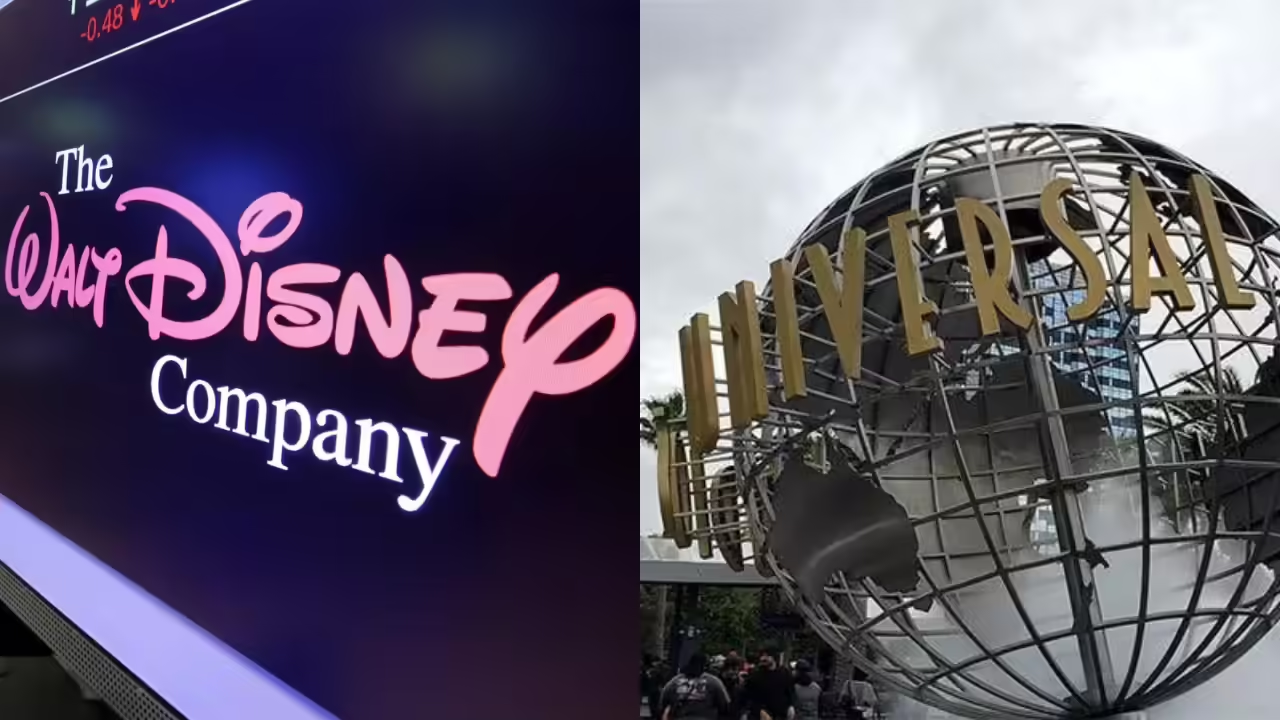
Image: Walt Disney. Cred.: Walt Disney Pictures
Disney and Universal have launched a groundbreaking lawsuit against AI company Midjourney, accusing it of widespread copyright infringement. The entertainment giants claim that Midjourney’s AI-powered image generator has unlawfully reproduced and distributed countless depictions of their most iconic characters, including Darth Vader, Elsa, the Minions, and Bart Simpson, without authorization. The lawsuit, filed in the US District Court for the Central District of California, argues that Midjourney has ignored repeated warnings and continues to refine its AI model to generate increasingly sophisticated versions of copyrighted works.
The legal battle underscores a growing concern in the entertainment industry regarding the unchecked expansion of artificial intelligence in creative fields. Disney’s Executive Vice President and Chief Legal Officer, Horacio Gutierrez, emphasized that piracy remains piracy, regardless of whether it is committed by an AI company.
NBCUniversal’s Executive Vice President and General Counsel, Kim Harris, echoed this sentiment, stating that the lawsuit is intended to protect the hard work of artists and the substantial investments made in creative content. The Motion Picture Association has also voiced its support, reinforcing the necessity of strong copyright protections in an era where AI-generated content is becoming more prevalent.
The lawsuit cites instances where Midjourney could easily be prompted to generate popular Universal and Disney characters, including Star Wars characters, Bart Simpson, Shrek, Ariel from “The Little Mermaid,” Wall-E, the minions from the film “Despicable Me” and more.
Midjourney, founded in 2021, has yet to respond publicly to the lawsuit. However, its CEO, David Holz, previously admitted that the company built its database by scraping vast amounts of content from the internet, raising concerns about the lack of consent from original creators. The lawsuit alleges that Midjourney has not only failed to implement safeguards against copyright infringement but has actively enhanced its AI model to produce higher-quality replications of protected works. The studios are seeking a preliminary injunction to halt Midjourney’s operations until adequate copyright protections are in place, along with monetary damages for the alleged violations.
Disney and Universal previously asked Midjourney to stop any alleged infringement or to implement technology to prevent users from generating images featuring their intellectual property, but the company has “ignored” their requests, according to the complaint.
The Motion Picture Association also weighed in on the lawsuit on Wednesday, with Chairman and CEO Charles Rivkin calling copyright protection “the backbone of our industry.” [..] “A balanced approach to AI that both protects intellectual property and embraces responsible, human-centered innovation is critical for maintaining America’s global leadership in creative industries,” Rivkin said in a statement.
This case is poised to set a significant precedent in the ongoing debate over intellectual property rights in the age of artificial intelligence. As AI technology continues to evolve, the legal and ethical implications of its use in creative industries remain a contentious issue. The lawsuit against Midjourney highlights the urgent need for clearer regulations governing AI-generated content and the responsibilities of AI developers in respecting copyright laws. If successful, the case could lead to stricter enforcement measures and compel AI companies to adopt more transparent practices regarding the use of copyrighted material.
Beyond the immediate legal ramifications, this lawsuit raises broader questions about the future of intellectual property in an era where AI can generate images, music, and even entire films with minimal human input. The ability of AI to replicate artistic styles and produce near-identical versions of copyrighted works challenges traditional notions of authorship and ownership. As AI-generated content becomes more sophisticated, industries reliant on intellectual property protection may need to rethink their strategies to safeguard creative assets. The outcome of this case could influence how AI companies approach content generation, potentially leading to new licensing models or technological solutions that ensure compliance with copyright laws.
The entertainment industry’s response to AI-driven content creation will likely shape the trajectory of innovation in the coming years. While AI presents exciting possibilities for enhancing creativity, it also poses significant risks to established intellectual property frameworks. The lawsuit against Midjourney serves as a stark reminder that, despite the rapid advancements in AI, the fundamental principles of copyright law remain crucial in preserving artistic integrity and protecting the rights of creators. Whether this legal battle results in tighter regulations or a shift in AI development practices, one thing is certain—Hollywood is taking a firm stand against unauthorized AI-generated content, and the implications of this case will reverberate across the creative and technological landscapes.

Leave a Reply
You must be logged in to post a comment.