



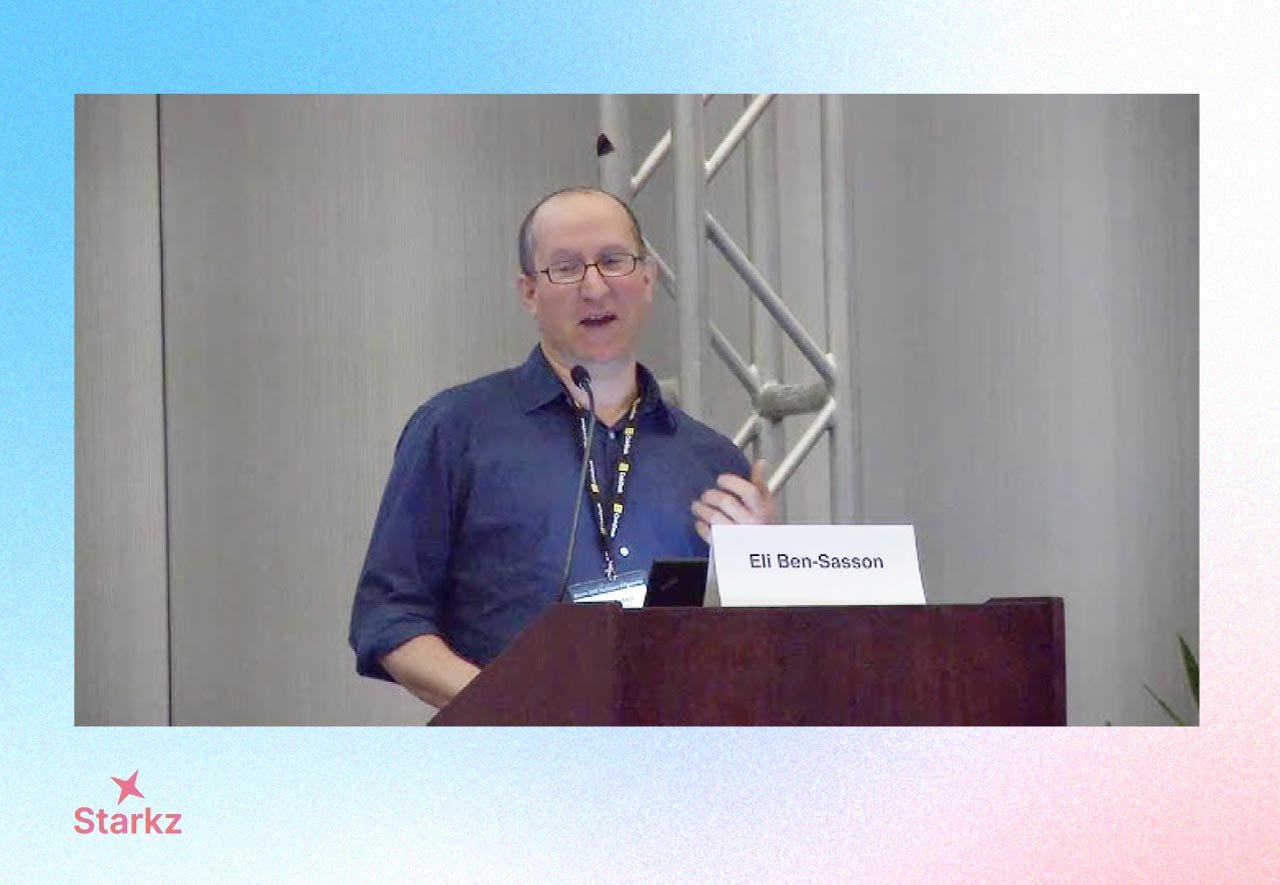
In 2013, a lecture at a modest Bitcoin conference near Stanford quietly set the stage for one of the most important developments in blockchain history. Eli Ben-Sasson, then a computer science professor, introduced the idea that zero-knowledge proofs—a cryptographic technique allowing information to be verified without revealing the information itself—could help solve Bitcoin’s looming scalability problem. His presentation, though technical, resonated with developers and researchers who were already grappling with the limits of the young cryptocurrency.
At the time, Bitcoin was barely five years old and still considered experimental by much of the financial world. Yet its rapid growth had exposed a fundamental weakness: the network struggled to process large volumes of transactions efficiently. Ben-Sasson’s proposal was striking in its ambition. By using zero-knowledge proofs, he argued, blockchains could compress complex computations into small, easily verifiable proofs. This would not only preserve privacy but also reduce the computational burden on the network, opening the door to greater scalability.
Greg Maxwell, a prominent Bitcoin Core developer, was among those in attendance. He later acknowledged the significance of Ben-Sasson’s ideas, noting that zero-knowledge proofs could “transform the way we think about blockchain scalability.” What began as an academic lecture quickly became a catalyst for a new wave of cryptographic innovation. Within a few years, Ben-Sasson and collaborators including Alessandro Chiesa and Eran Tromer developed a practical implementation of zero-knowledge proofs that would underpin privacy-focused cryptocurrencies such as Zcash. The technology later evolved into zk-rollups, now used in Ethereum’s Layer 2 ecosystem to process thousands of transactions off-chain before settling them securely on the main blockchain.
The implications of that 2013 lecture continue to reverberate across the industry. Zero-knowledge proofs are no longer a niche concept but a cornerstone of modern blockchain design. They offer a rare combination of privacy, efficiency, and scalability—qualities that address the very tensions at the heart of decentralized systems. StarkWare, the company co-founded by Ben-Sasson, has become a leader in deploying these solutions, demonstrating how academic research can ripple outward into billion-dollar applications in decentralized finance and beyond.
Bitcoin itself has yet to fully embrace zero-knowledge technology, and debates over its scalability persist. But the trajectory of the broader blockchain ecosystem suggests that Ben-Sasson’s vision was prescient. His lecture near Stanford was not just a technical presentation; it was a glimpse into a future where mathematical proofs could unlock the potential of digital economies.



Leave a Reply
You must be logged in to post a comment.